Monday, March 24, 2014

Too Much on Your Plate?

Happy Monday y’all! Hope you got out and enjoyed the beautiful sunshine! Over the weekend, my sister mentioned that a friend of hers asked about my diet. She automatically assumed, in order to stay in shape and on track with my fitness goals, I ate very little. That is FAR from the truth in fact, I eat A LOT of food but I weigh and measure it out so I know exactly what I am getting myself into. I use weight because it allows me to monitor the macronutrient ratio based on serving size.


But what is the difference between a portion and a serving you might ask? Or how do you know if you are eating too little or too much? In today’s society, serving sizes are double if not triple what they were 20 years ago and could feed 2-3 people versus just one. For example a blueberry muffin 20 years ago was about 1.5 ounce and contained 210 calories whereas today, it is about 5 ounces and has 500 calories! Or how about a cookie…back then it was about 1.5” in diameter and around 55 calories but today; it is 3.5” around and 275 calories, a difference of 220 calories! To clarify, a portion is the amount of food you choose to eat for a meal. It is your decision how large (or small) the potion will be. A serving on the other hand is a measured amount. For example, one slice of bread is a serving according to the nutrition label.


How do you monitor your servings? The best way (I think) is to weigh your food using a food scale. These can be purchased at most stores and range from $10-$50 depending on the type you choose. I use a digital scale that not only allows me to monitor the amount of food but I can also keep better track of my macronutrients for the day. The culprit to your weight loss success may not be solely due to what you are eating, but HOW MUCH you are eating. The serving size is listed on most food labels and can be used to keep track of your daily intake. However, when it comes to specific diets, such as for a marathon runner or a bodybuilder, they are highly individualized and will depend on your body weight and your goals to properly fuel your body. 


This image is a great visualization tool for serving sizes because it relates the serving size to an object that we are all familiar with. This will allow you to monitor how much is on your plate while on the go, dining out (or at home) and hopefully urge you to ask for a go box to take home the extra serving (s).  When in doubt, add extra veggies and cut down on the foods that are processed, fried, smothered, or high in fat. Remember too much of a good thing (in terms of food) can be TOO MUCH. J


If you haven’t noticed, I am all about delicious meals that are quick to make because let’s face it, who has all day to spend in the kitchen?!  I found this recipe online and cleaned it up a bit for a quick lunch idea. You can serve as a lettuce wrap or stuffed in a whole wheat pita would be pretty fantastic as well. 


Until tomorrow!

J


Friday, March 21, 2014

Drink up Buttercup

What do you think is one of THE most important resources for the human body? Is it carbohydrates or fats or proteins? Is it vitamins and minerals? It is something that most people overlook and do not take seriously….It is water! Your body can go weeks without food but only a few days without water. Did you know that a man’s body is around 60% water and a female’s is about 50% or that the human brain is about 75% water?


Water is highly involved in many bodily processes such as digestion, protection, pH regulation, temperature regulation, and transportation for substances (plus many many more). For example, blood is about 83% water and carries oxygen, carbon dioxide, nutrients and waste products from cell to cell. Think about urine. Urine removes the waste products from our body and if we are not consuming enough water thus not producing urine, the toxic waste levels can build up with in our bodies and cause us to become ill.


I cannot emphasize enough just how important water is! But what about water and how it relates to your fitness and/or weight loss goals? It’s not that important right? WRONG! Water HELPS with exercise performance, fat metabolism and fluid retention.


When we exercise, water helps enhance muscle contraction and tone in addition to aiding our effort and performance during a given task. If you are lacking energy and quickly fatigue during your workouts, try increasing your fluid intake throughout the day and especially during and post-workout. But how does water help metabolize fat? When the body is adequately hydrated, it can draw from fat stores to perform physiological tasks but when the body is lacking water, it has no choice but to draw water from within other cells, including fat cells, which decreases the likelihood that these fat stores will be burned off as energy, potentially resulting in increased fat storage over time.


Lastly, the biggest misconception that I hear about drinking water is if we are feeling puffy and retaining fluids, the more water we drink the more water we will hold. This is not true! It is actually lack of water that causes you to hold water. The body is extremely intelligent and when you are not drinking enough water, it thinks that it needs to hold to every drop it can get in order to perform. Another culprit to water retention is when you consume excessive sodium. This will cause you to hold water but it is a small factor compared to not drinking water. If you did consume too much sodium, guess what, you need water to shuttle the extra sodium out of your body…so drink up buttercup!


I am flying solo this weekend so I decided I will make something absolutely fabulous to enjoy that my hubby probably would not be too excited about. I am going to make a layered salad! I love the way layers look whether it be clothing, jewelry, hair styles, you name it! Here is my plan J


Have a great weekend y'all!

J

Thursday, March 20, 2014

What in the World?!


Some of you may have seen pieces of equipment in the gym, at a sporting goods store, or in a magazine and wondered WHAT IN THE WORLD IS THAT?! There are some pretty neat gizmos and gadgets that you can use to change up your workout and prevent boredom, whether it is at home, in the gym or on the road.


The BOSU (BO-SUE)-This blue rubber, half-dome looking thing is named for “both sides up” meaning it can be used with the blue dome facing up or with the flat side facing up. It can be very challenging and add variety to any given workout. There are so many exercises you can do with the BOSU including: squats (on either side, with one foot on), lunges (one foot on at a time), multiple core exercises, push-ups, plyometric workouts, ect.


The TRX (Total Body Resistance Exercise)-First utilized in the Navy SEALS, suspension training will help develop balance, strength, flexibility with bodyweight exercises. The principal behind this piece of equipment is utilizing gravity and your bodyweight to perform different exercises. Some gyms offer TRX group classes which can be very fun especially if you get a couple friends to go. You can work with a trainer one-on-one or watch youtube videos to learn a variety of movements.


The Kettlebell- Developed in Russia; the Kettlebell is a cast-iron weight that has a cannonball looking bottom with an upside down triangular handle. This piece of equipment is highly utilized in Crossfit, mobility work including the Turkish getup, conditioning and strength development. Some gyms offer Kettlebell classes or if you want one-on-one practice, hiring a trainer might be of interest. My favorite exercise is the Kettlebell swing which I use for conditioning purposes. I feel strong and love the way my core burns after a workout. Watch here: Kettlebell Swing


Jacob’s Ladder- This piece of equipment was developed to help a man suffering from knee and back pain, maintain his conditioning without inducing further injury. It is not only efficient but also an effective tool that provides full body conditioning! You can use it for aerobic and endurance training, weightloss, and intervals. It is not as common as the other pieces of equipment but sure is fun to use if you have the chance!


Battle Ropes- These are 2-inch thick ropes that are awesome tools for conditioning and building strength and stamina. They can be found at some gyms or you can purchase them for your own use. The rope is anchored to a non-movable pole or piece of equipment and moved in different patterns. If you want to feel the burn, a battle rope workout is what you need to try. Just don’t expect to dry your hair the next couple of days! Watch here: Battle Ropes


Prowler Sleds- A piece of equipment you will find in most strength, Crossfit, and athletic performance gyms. The Prowler sled was originally designed to train and condition football linemen. This is an awesome conditioning tool that really develops strength and power in the legs, hips, and arms. A sled will truly reveal the type of shape you are in, trust me…I have almost puked a couple times from sled workouts. The Prowler is excellent for conditioning, dragging, pushing, and building strength and endurance. Watch here: Prowler Push


I really hope that you get to use one of these pieces of equipment! I cannot emphasize enough how important it is to add variety to your training regimen not only to prevent boredom but also keep your body guessing in order to maximize your workouts!


Take care of you,
J

Wednesday, March 19, 2014

Importance of a Strong Core

Right before a show :) 
Most may think that the term 'core' refers to chiseled 6-pack abs. It is true that the abdominals are a component of the 'core' but not its entity. The core is actually what I like to call Grand Central Station! It is pretty much your body, minus your arms and legs. It is your erector spinea muscles (muscles along your spine), your rectus abdominus (superficial abs), internal and external obliques (side abs), transverse abdominals (deep abs), pelvic floor muscles, and diaphragm. Other muscles include gluteus maximus (major rump muscle), latissimus dorsi (a major back muscle), and your trapezius (muscles that raise and lower your shoulders as if you are shrugging them). As you can see, your core is a HUGE player in the way that you feel, move, and function every day.


Why is it important to have strong core muscles? There are soo many reasons but for starters the core determines a large portion of our posture, providing support and lessening wear and tear on our spine. Your core aligns your spine, ribs, and pelvis in order to resist a force, whether it be static (such as gravity) or dynamic (any type of movement).

The core is essential to a healthy back. When the core is weak, one may be susceptible to low-back pain, pain that affects many on a daily basis. Strengthening the deep muscles of the core allow for improved stability, balance and prevention against injury.

Core muscles play a major role in protecting your vital organs and central nervous system. Your core not only surrounds your vital organs and your central nervous system, but it is also where your body’s largest (and most important) veins and arteries are based. Keeping strong core muscles will help ensure everything stays protected as you move through your day.

The deep muscles of your core such as the transverse abdominis, allow for a woman to push during childbirth. The pelvic girdle allows continence, the ability to withhold a bowl movement and urinary stress. Core muscles are very important during the valsalva maneuver; the tightening of your thorax when holding your breath. Examples include pushing, lifting, and birthing a child. As you can see your core is a crucial component to living a healthy life.

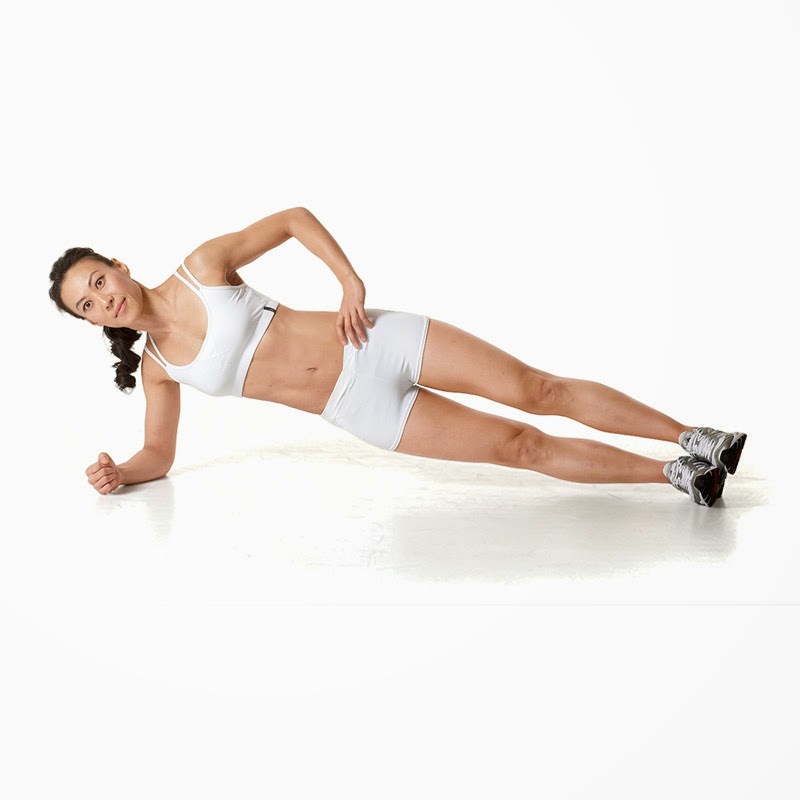
To strengthen your core, you not only need to train your abdominals (each and every layer) but you also need to train your back, hips, and glutes. Here is one of my core workouts that will leave you feeling those muscles ya didn't even know you had!  Perform this circuit 3 times through! **Pictures are from womenshealthmag.com    

  • Plank (30 secs-1 min)- Start in push-up position with your forearms on the ground and legs extended behind you. Keep a nice flat back, draw your belly button towards your spine and hold.
  • Side plank (30 sec-1 min)- Lie on your right side with your legs straight. Prop yourself up with your right forearm so your body forms a diagonal line. Rest your left hand on your hip. Brace your abs and hold.
  • Superman (10x)- Lie face down on stomach, arms and legs outstretched. Raise arms and legs off the ground, reaching in opposite directions, and hold.
  • Crossover Mountain climber (15x each side)- In pushup position, bring knee to opposite shoulder and back. 
  • Flat Bench Lying Leg Raise (10x)- Lie with your back flat on a bench and your legs extended in front of you off the end. Place your hands by the sides holding on to the bench and raise your legs (keeping them straight) until the bottom of your feet are facing the ceiling before lowering back to the starting position.
  • Swiss Ball Rollouts (15x)- Kneel with hands on Swiss ball. Roll ball out, leaning chest forward and extending arms, then roll ball back in.
  • Glute Kickbacks (15x each side)- Begin on your hands and knees. Looking forward, squeeze your buttocks as you simultaneously raise a leg up. You can repeat the same leg or alternate legs.


I was having a hard time picking a treat for y'all but this one has been on my to-do list so what better time than now?

PB & Cocoa No-Bake Cookies 


Ingredients: 

1/2 cup Natural peanut butter (I like crunch)
1/2 Banana, mashed
3/4 cup Baking stevia
1/2 cup Vanilla almond milk (or nonfat milk)
4 TBSP Cocoa powder
3 cups Quick-cooking oats (I use gluten free) 
Pinch of Salt

Directions:

Put mashed banana and peanut butter together in a skillet and cook over low to medium heat, stirring until peanut butter and banana are combined.
Once the peanut butter is melted, take the skillet off the heat and add the rest of the ingredients, stirring until everything is mixed well.
Drop cookie dough on a baking sheet lined with wax paper, patting cookies into desired shape. Place baking sheet in fridge or freezer until cookies are set. Enjoy!!

Facts:  24 Cookies   75 Calories per cookie  3.5 g Fat  15 g Carbs   0.5 g Sugar    3 g Protein 


Xoxox,

J

Tuesday, March 18, 2014

Coco-nutty Goodness

Whenever I see or smell a coconut, I think of lounging on a sandy beach, the sun shining down on me pina colada in hand. Oh if only! All fats are not created equally and it is important to set the record straight about which ones are good for you, which ones should be used sparingly, and the fats that should be avoided at all cause.  Let’s start with the bad and get them out of the way.

Saturated fats! Saturated fats can raise total blood cholesterol levels and LDL (bad cholesterol) levels, increasing your risk of cardiovascular disease. A saturated fat is easily identified by its solid form at room temperature. Examples include mainly animal sources such as red meat, pork fat, poultry, and full-fat dairy products. Butter, margarine, and shortening are also types of saturated fats that are used in cakes, cookies, and many baked goods.

Trans fats! You want to avoid trans fats like you try to avoid telemarketers. Trans fats occur naturally in some foods in small amounts. BUT most trans fats are made from oils through a food processing method called hydrogenation. This alters the chemical composition of the fat, making it easier to cook with and decrease the chance of spoilage. Why do you think Twinkies have such a long shelf life? YUCK!  Trans fats impose the same health risks as saturated fats and other countries actually place a legal limit to trans fat content.

On to the good fats J Good fats are referred to as unsaturated fats and are liquid at room temperatures.  Monounsaturated fats are found in a variety of foods and oils including avocado, nuts, olive oil and peanut oil. These fats have been shown to improve blood cholesterol levels, may benefit insulin levels in addition to helping control blood sugar control. Polyunsaturated fats are mainly vegetable oils such as sunflower, sesame, soybean, safflower, and corn oil. They are also the primary fat in seafood. They have the same health benefits as monounsaturated fats. Omega-3 fats are a type of polyunsaturated fat and are found in fatty fish (salmon, mackerel) and shellfish (oysters). They are also found in soybean and canola oil, walnuts and flaxseeds. Research shows they are especially beneficial to your heart and could decrease your risk of coronary artery disease.

But what about coconut oil? It has become very popular and is used for dietary purposes as well as skin, hair, and even medical purposes. Coconut oil is a type of saturated fat made up of mostly medium chain fatty acids (MCFAs)  but remember…not all fats are created equal! Unlike butter and margarine, coconut oil is not artificially manipulated by hydrogenation. It is also, depending on room temperature, can be solid, semi-solid, or liquid and it does not contain cholesterol like other saturated fats. There are many health benefits to coconut oil but as with most things, moderation is key, for it is still a saturated fat.  

Health benefits of coconut oil include (and there are many more):  

Supports immune system
Promotes healing and tissue repair
Hydrates and improves skin tones
Reduces psoriasis and eczema symptoms
Improves digestion and nutrient absorption
Has anti-fungal, antiviral and antibacterial properties
Boosts metabolism and aids in weight maintenance

Provides a quick source of energy

Why not give it a try? It is a delicious alternative for cooking and baking (perfect example is the recipe below)


Monday, March 17, 2014

All Things Green

Happy St. Patrick’s Day! Hope y’all are wearing your green so you don’t get pinched! In celebration, I want to talk about all things green. There are so many wonderful green things that you can eat, drink, and use that provide plentiful health benefits and make you feel pretty darn good.

Green superfoods are at the top of the list. Superfoods by definition are nutrient dense foods found in nature that are also calorically sparse, meaning they pack a lot of punch for their weight in terms of nutrients. Superfoods are fantastic sources of antioxidants and essential nutrients, nutrients the human body cannot make therefore must be acquired through diet. I’m positive y’all were told to eat your spinach in order to look like Popeye. We know eating greens is good for us but eating greens in the superfood family are even better! They have the highest concentration of easily digestible nutrients, vitamins, and minerals. They provide proteins, phytochemicals (what gives fruits and vegetables their colors and antioxidant properties), and help aid in healthy digestive function.

Green superfoods get their pigmentation from the biomolecule Chlorophyll. Research has shown that the molecular structure of Chlorophyll resembles that of human blood and when consumed, the production of hemoglobin has increased. In turn, an increase in hemoglobin in the bloodstream signifies more oxygen-rich blood, a necessity for all cells to thrive.

Here are top green superfoods that are easy to work into your diet:

  • Green leafy vegetables- Such vegetables are readily available and extremely nutritious, yet most people do not eat enough of them. Greens include spinach, kale, bok choy, endive, broccoli sprouts, watercress, parsley and dandelion greens.  
  • Spirulina- Maybe you have seen Spirulina protein at the grocery store or heard of it but have no idea what the heck it is. Spirulina has been consumed for many many years in Africa and Mexico. It is a cultivated micro-algae and is contains roughly 70% complete protein (steak only contains about 25% protein when cooked). Spirulina has been shown to control blood sugar levels and can be a key food for diabetics.
  • Wheat grass- Wheat grass is sprouted from a wheat seed, but unlike the whole grain, once it is sprouted it no longer contains gluten. Wheat grass has been shown to normalize the thyroid gland thus stimulating the metabolism and aiding in weight loss and healthy digestion.
  • Seaweeds- Seaweeds are nutritionally dense, more so than most plants on earth, and also a rich source of minerals because they have access to all nutrients in the sea. Seaweeds are high in calcium (contain 10x more calcium than milk) and are also rich in chlorophyll, boosting your body’s ability to detoxify itself.  
  • Brussels sprouts- These mini cabbage looking vegetables contain more glucosinolates (compounds that detoxify our bodies and work against cancer) than many other vegetables.
  • Green Tea- This type of tea is made from un-oxidized tea leaves therefore making it the least processed type of tea. It contains the most antioxidants and beneficial polyphenols. Green tea has been shown to boost the metabolic rate and increase fat burning in individuals. Green tea may also lower your risk of certain cancers such as breast, prostate, and colorectal.


As you can see, there is more to celebrate about the color green than just St. Paddy’s day! Here is a favorite recipe that includes some superfoods!


Take care of you!

J

Friday, March 14, 2014

Cravings 101


Most of us crave a certain food every once in a while. Maybe it is something sweet or salty or savory or a decadent piece of chocolate. Whatever the craving might be, there is a reason why you want to stuff your face with it. But if you were to ask yourself if you were hungry, the answer would most likely be “no”. Hunger and cravings are very different from one another. Hunger is controlled by your stomach and is a survival mechanism whereas cravings are controlled by your brain and are your body’s way of communicating with you. 

For example, when you have a sugar craving, would it be satisfied if you munched on a sugar cube? Probably not. So what is your body saying... Or how about a craving for chocolate. Is it really the chocolate you crave (I crave chocolate ALL THE TIME lol) or is it your body's way of saying "Hey listen up! I need something dang it!" More than likely your cravings are trying to tell you something, especially if it is a reoccurring thing. Here is a chart that will help you navigate your cravings and possibly explain WHY you are having them and WHAT to do about them. Try one of the suggested foods first and wait 30 minutes or so. If you still have that dire need to eat chocolate, go ahead but go for a square or two, not a whole bar! 


Hopefully this provides some insight on how intricate the body is. When you really listen to your body and the way it feels, you will be amazed at what you can discover!

Recipe time! I love guacamole and could eat it every day if I let myself! I think this recipe has a delicious twist to your average dish.


Take care of you!

J